Subtotal $0.00


When most people think about losing weight, cardio is usually the first thing that comes to mind. Treadmills, ellipticals, bikes, running, and long workouts designed to burn as many calories as possible.
Cardiovascular exercise can absolutely play an important role in a weight-management program. But if your goal is to lose body fat while becoming stronger, healthier, and more capable, resistance training deserves a place in your plan too.
Research has consistently found that resistance training can improve body composition, including reductions in body-fat percentage and fat mass, while helping maintain or build lean mass. That becomes especially important when weight loss is part of the goal.
As a personal trainer, I help clients use strength training as one part of a complete approach built around their goals, experience, lifestyle, and individual starting point. A balanced program can combine resistance training, cardiovascular exercise, nutrition, recovery, and sustainable habits based on the needs of the individual.
Weight Loss and Fat Loss Aren’t Exactly the Same Thing
The number on the scale can be useful, but it doesn’t tell the entire story.
Your body weight includes fat, muscle, water, bone, and everything else that makes up your body. When someone says they want to “lose weight,” what they usually mean is that they want to lose excess body fat while keeping as much useful lean tissue as possible.
That’s one reason strength training matters.
During weight loss, some lean tissue can be lost along with fat. Resistance exercise can help preserve lean mass and strength during that process, particularly when it is combined with appropriate nutrition.
In other words, the goal shouldn’t necessarily be to make the scale move as quickly as possible.
The goal is to improve your body composition, health, fitness, strength, and quality of life while building habits you can actually maintain.

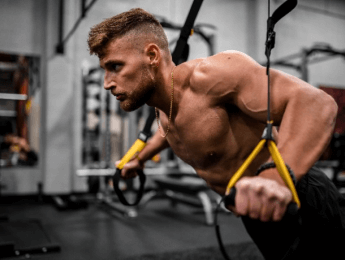
1. Strength Training Helps Protect Lean Muscle
When you consistently challenge your muscles through resistance training, you’re giving your body a reason to maintain and develop that tissue.
That can be especially valuable during a period of weight loss.
Research comparing different approaches has found that resistance training is particularly effective for increasing lean mass, while programs combining resistance training with calorie restriction can help maintain lean tissue while body weight is being reduced.
Why does that matter?
Because muscle isn’t something you should view only from an appearance standpoint.
Being stronger can make everyday tasks easier, improve physical capability, support athletic performance, and allow you to continue doing more as you get older.
A successful weight-management program should help you become more capable, not simply lighter.
2. You Can Improve Body Composition Without Obsessing Over the Scale
Sometimes progress is happening even when body weight isn’t changing as dramatically as someone expects.
You may be:
- Losing body fat
- Maintaining or building muscle
- Getting stronger
- Improving conditioning
- Moving better
- Wearing clothes differently
- Completing workouts that used to be difficult
- Recovering better between exercises
- Becoming more consistent
Research on resistance training has found measurable reductions in body-fat percentage, fat mass, and visceral fat even when resistance training is examined on its own.
That’s why I don’t believe the scale should be the only measurement of success.
Your progress should be viewed from several angles.
3. Getting Stronger Changes What You’re Capable of Doing
One of the biggest benefits of resistance training is straightforward:
You get stronger.
As strength improves, exercises and daily activities that once felt difficult can become more manageable.
That may mean being able to:
- Lift heavier weights
- Perform more repetitions
- Carry groceries more easily
- Climb stairs with less difficulty
- Get up and down from the floor more confidently
- Participate in recreational activities
- Handle longer or more challenging workouts
- Feel more physically capable in everyday life
That is progress you can feel—not just measure.
And for many people, those victories provide motivation that goes far beyond watching a number on a scale.
4. Strength Training Gives You Something Positive to Chase
There is an important psychological difference between training only to lose something and training to gain something.
Instead of every workout being about burning calories or trying to make yourself smaller, strength training gives you performance goals.
Maybe this month you’re trying to:
- Perform your first full push-up
- Squat with better technique
- Increase the weight you’re using
- Complete another repetition
- Improve your balance
- Learn a new exercise
- Build enough strength to perform an exercise you couldn’t do before
Now the goal isn’t simply:
“I need to lose weight.”
It can also become:
“I want to see what I’m capable of.”
That change in focus can make training feel far more rewarding.
What About Cardio?
You don’t have to choose between strength training and cardiovascular exercise.
In fact, for many people, a combination of the two makes the most sense.
Recent research comparing aerobic, resistance, and combined training found that aerobic and combined programs can be particularly effective for reducing absolute fat mass, while resistance training provides important benefits for strength and lean tissue.
A balanced fitness program might include:
Resistance Training
To develop strength, muscle, and physical capability.
Cardiovascular Training
To improve endurance, cardiovascular fitness, and work capacity.
Daily Activity
Walking and simply becoming more active outside scheduled workouts can contribute to an overall healthier lifestyle.
Nutrition
Your eating habits play an important role in body-weight and body-composition goals.
Recovery
Sleep, rest, stress management, and appropriate training volume all affect your ability to consistently perform and recover.
The exact balance shouldn’t be identical for everyone.
That’s why your starting point matters.
What Should a Weight-Loss Strength Program Look Like?
There isn’t one perfect workout for everyone.
A beginner who hasn’t exercised in ten years shouldn’t automatically follow the same program as an experienced lifter.
An effective program should consider things like:
- Your current fitness level
- Exercise experience
- Training history
- Goals
- Schedule
- Movement abilities
- Available equipment
- Recovery
- Lifestyle
- Personal preferences
From there, a program can use exercises that train the major movement patterns and muscle groups while gradually progressing as you become stronger and more proficient.
Depending on the individual, that might involve a combination of free weights, resistance machines, cable exercises, cardiovascular training, and functional-training tools. The equipment and exercises should be selected based on the person’s goals, abilities, experience, and available training environment.
You Don’t Have to Start With Heavy Weights
One misconception about weight training is that you need to already be strong before you begin.
You don’t.
Strength is something you develop through training.
A new client may begin by learning fundamental movements with:
- Body weight
- Machines
- Light dumbbells
- Cables
- Resistance bands
- Modified exercises
As technique and confidence improve, resistance can gradually increase.
The goal isn’t to prove how strong you are on your first day.
The goal is to establish a starting point and then improve from there.
Nutrition Still Matters
Strength training is powerful, but no workout program eliminates the importance of nutrition.
Your eating habits, food portions, protein intake, overall energy intake, consistency, and other lifestyle factors all contribute to weight-management results.
Research also suggests that adequate protein intake can help support preservation of lean tissue during weight loss, particularly when combined with resistance training.
That doesn’t mean you need a perfect diet.
For most people, sustainable progress begins by improving the habits they already have rather than trying to completely change everything overnight.
That can mean learning to make better choices more consistently, understanding how nutrition supports training, and developing habits you can maintain long after the initial motivation wears off.
Common Weight-Loss Training Mistakes
Doing Random Workouts
A different workout every day may feel challenging, but challenging and progressive aren’t necessarily the same thing.
A structured program gives you something to measure and improve.
Doing Too Much Too Soon
More isn’t automatically better.
Trying to dramatically increase exercise, restrict food, and completely change your lifestyle all at once can make consistency difficult.
Start from where you are and build.
Only Measuring Scale Weight
The scale is one measurement.
Strength, measurements, body composition, fitness, consistency, energy, clothing fit, and performance can provide additional information about your progress.
Avoiding Weights Because You’re Afraid of “Bulking Up”
Building significant amounts of muscle requires time and consistent training. Resistance training should not automatically be avoided simply because your primary goal is fat loss.
Treating Exercise Like Punishment
Training shouldn’t be something you do because you ate something you regret.
Exercise is an opportunity to become stronger, healthier, more capable, and more confident.
Consistency Beats the Perfect Workout
You can spend hours looking for the perfect workout program, exercise, diet, or training split.
But even a great program can’t work if you can’t follow it consistently.
Long-term progress comes from repeatedly doing the basics well:
Train consistently.
Progress gradually.
Eat with purpose.
Recover.
Track what matters.
Adjust when necessary.
Then keep going.
Fitness doesn’t have to be perfect to be effective.
Ready to Start Strength Training?
If your goal is weight management, improved body composition, increased strength, or simply becoming more physically capable, resistance training can be an important part of your fitness plan.
You also don’t have to figure it all out by yourself.
As a personal trainer, I work with clients to build training around their goals, experience, abilities, and lifestyle.
Your process begins with a consultation where we’ll discuss your goals, exercise history, motivation, nutrition habits, and starting point.
From there, we can determine the right path forward.
Every Client Deserves an Advocate.
Ready to get started?
