Subtotal $0.00

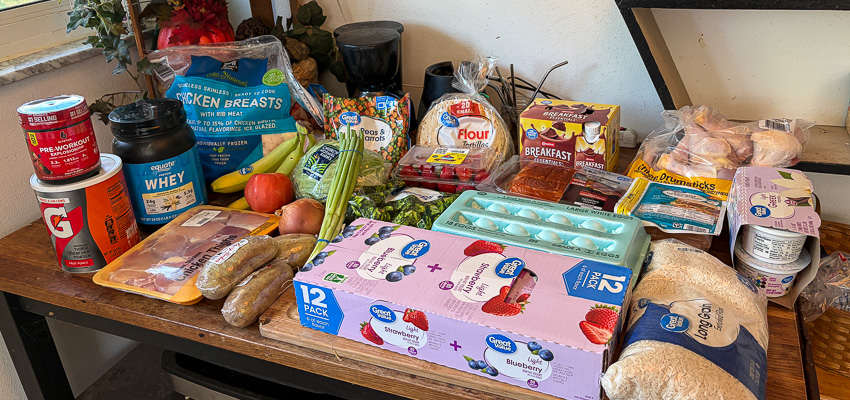
If your goal is to build muscle while losing body fat, these grocery shopping tips can help make your nutrition easier to manage.
What you bring home from the grocery store can make it much easier—or much harder—to stay consistent with your nutrition.
That doesn’t mean you need a cart full of foods labeled “diet,” “low-carb,” or “high-protein.” And it doesn’t mean you need to eat chicken, broccoli, and rice at every meal.
The goal is to choose foods that help you do two things:
Give your body the nutrients and protein it needs to support training and muscle, while making it easier to control your overall calorie intake.
The grocery store is where a lot of that starts.
If the foods you need are already in your kitchen, making a good choice when you’re hungry becomes much easier. If they’re not there, convenience usually wins.
Here are five things I recommend thinking about when you shop.
1. Start Around the Outside and Build Your Cart Around Protein
If your goal is to build muscle while losing body fat, protein should be one of the first things you think about when you shop.
A simple place to start is around the outside perimeter of the grocery store.
In many grocery stores, that is where you will find much of the fresh food that can form the foundation of your meals—meat, poultry, fish, eggs, dairy, fruits, and vegetables.
That does not mean everything in the middle aisles is unhealthy or that you should avoid them. Foods such as rice, oats, beans, canned vegetables, whole-grain products, spices, and other useful staples are usually found there.
The idea is simply to build the foundation of your cart first.
Start with your protein sources and produce so the foundation of your meals is already in the cart before you move on to the rest of the store.
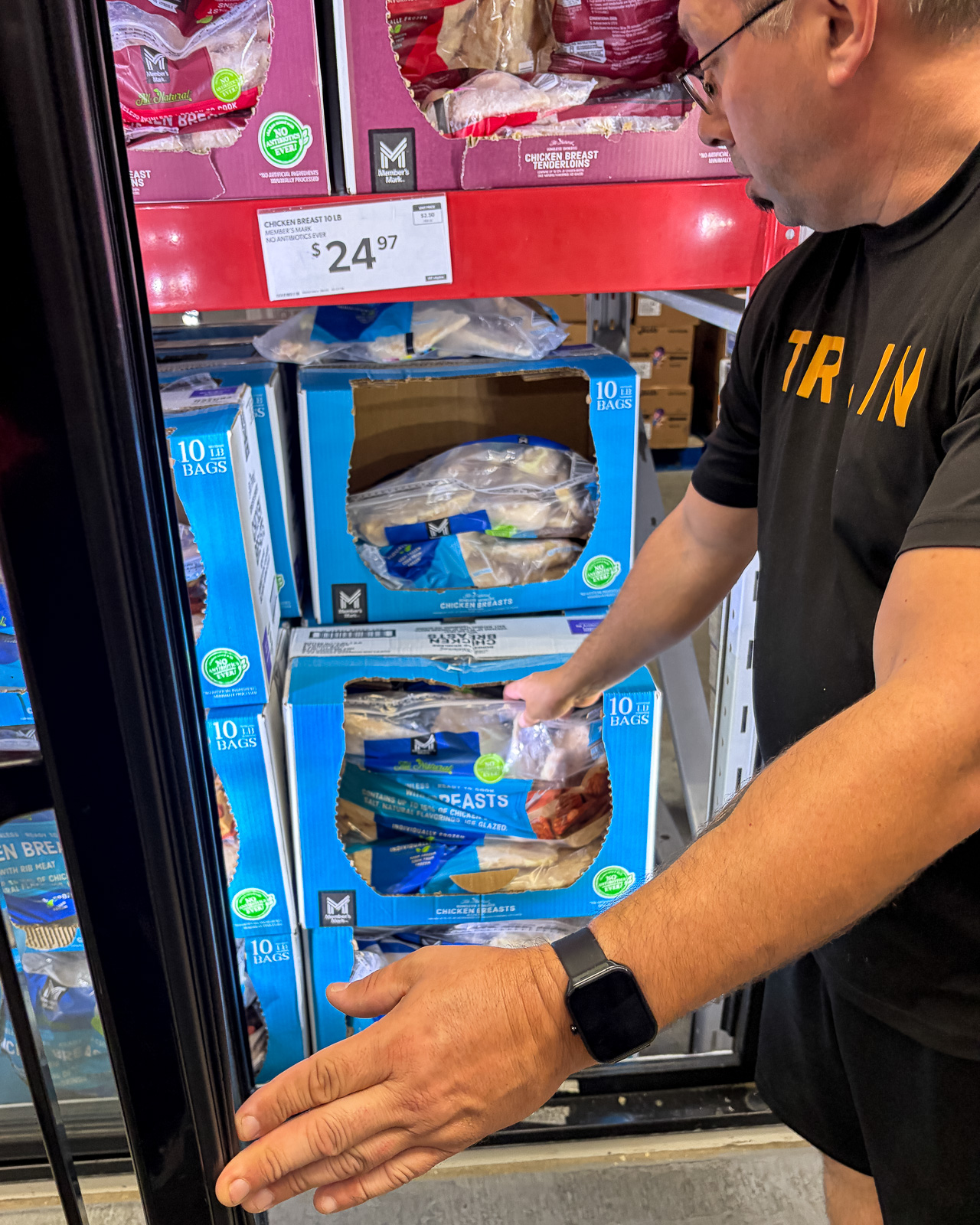
Protein provides the amino acids your body needs to repair and build muscle tissue after training. It can also help make meals more filling, which may make it easier to manage your overall calorie intake.
Good protein options might include:
- Chicken
- Lean beef
- Turkey
- Fish
- Eggs
- Greek yogurt
- Cottage cheese
- Milk
- Protein shakes or powders when convenient
Build the Rest of the Meal Around Your Protein
If you know you are planning chicken for two dinners, salmon for another, eggs or Greek yogurt for breakfast, and a convenient protein source for lunch, it becomes much easier to decide what vegetables, carbohydrates, and other foods should go with them.
People often shop the other way around.
They fill the cart with snacks, side dishes, sauces, and convenience foods, and then try to figure out where the protein is going to come from.
For building or maintaining muscle, protein should not be an afterthought.
Start around the outside, choose your protein and produce first, and then build the rest of your meals around them.
2. Buy Fruits and Vegetables You Will Actually Eat
Fruits and vegetables can add a lot of nutritional value to your meals without making nutrition more complicated than it needs to be.
They provide vitamins, minerals, fiber, and food volume, which can help support overall health and make meals more satisfying.
But there is one mistake I see people make all the time:
They buy fruits and vegetables because they think they should eat them—not because they actually like them or know how they are going to use them.
Then those foods sit in the refrigerator until they go bad.
That does not help your nutrition—or your bank account.
A better approach is to buy produce you know you will realistically eat.
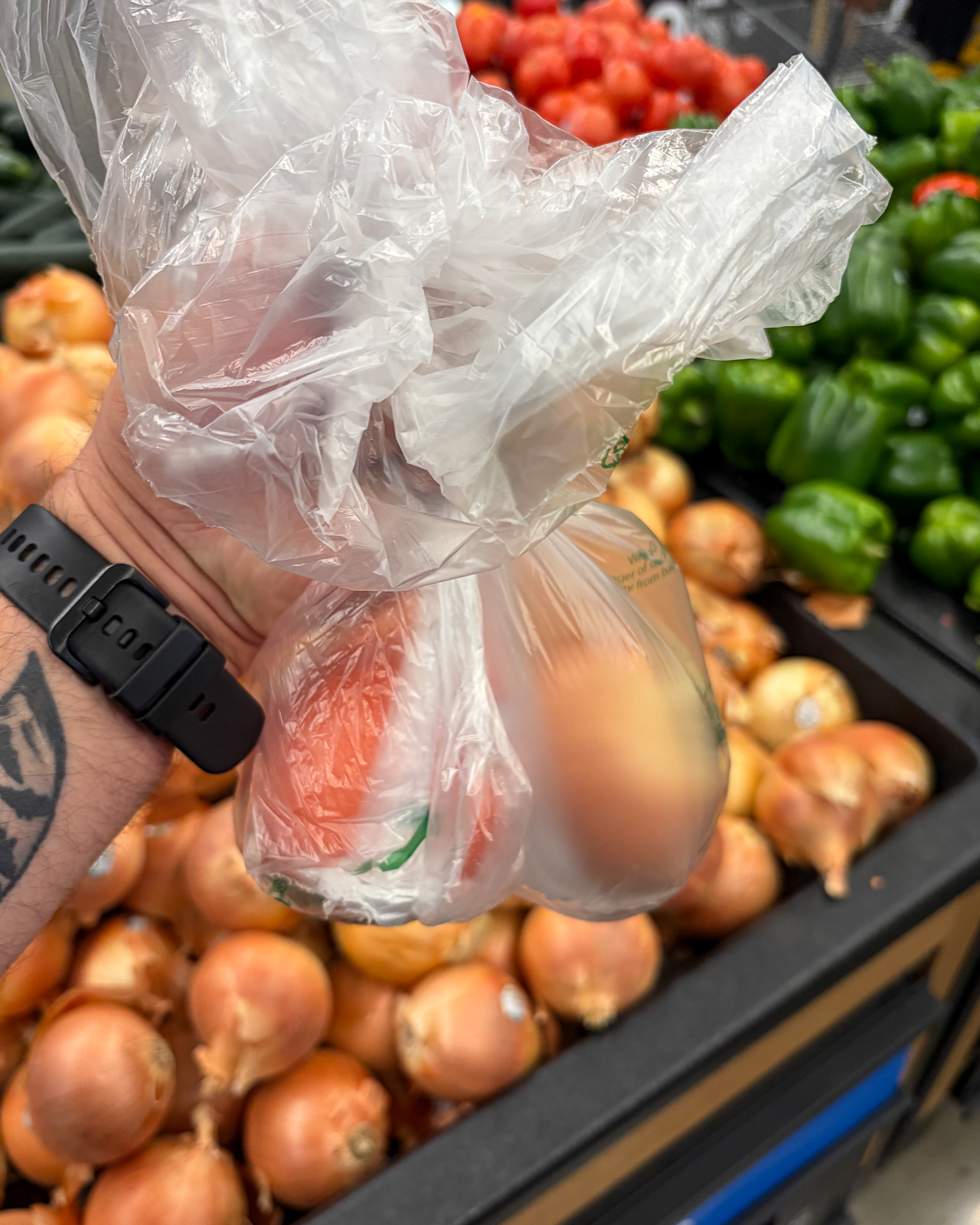
If you like strawberries, buy strawberries.
Prefer frozen broccoli because it is easy to prepare? Buy frozen broccoli.
Baby carrots you will actually snack on are a better choice than a more “impressive” vegetable that ends up getting thrown away.
Fresh, frozen, and canned produce can all have a place in a healthy diet.
The most important thing is consistency.
The best fruit or vegetable is the one you will actually eat regularly.
This also helps with body-composition goals because fruits and vegetables can add more volume to meals without adding a large number of calories.
That can make it easier to feel satisfied while still controlling overall intake.
The goal is not to make every meal perfect.
The goal is to make it easier to eat well consistently.
3. Choose Carbohydrates That Support Your Training
Carbohydrates often get blamed when people are trying to lose body fat, but they can play an important role in supporting training performance.
If you are lifting weights, doing conditioning work, or simply trying to stay active, carbohydrates can provide useful fuel for that work.
The goal is not to avoid carbohydrates.
Instead, choose them with some purpose.
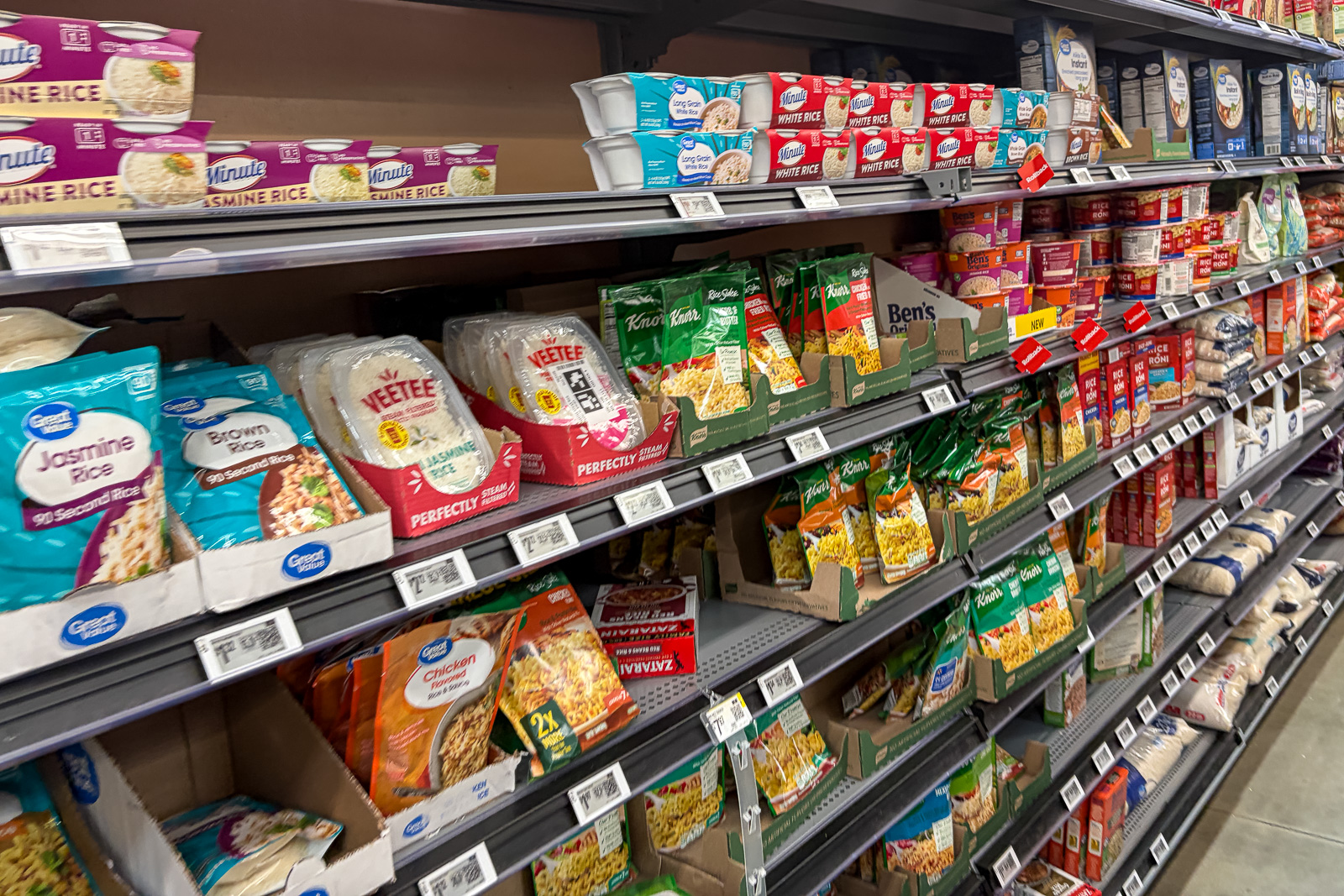
Good options can include:
- Rice
- Potatoes
- Oats
- Whole-grain breads
- Pasta
- Beans
- Fruit
- Whole-grain cereals
These foods can help provide energy for training while also fitting into a nutrition plan aimed at improving body composition.
The bigger issue is usually how much you are eating, not simply whether a food contains carbohydrates.
A bowl of rice can fit into a fat-loss plan.
So can potatoes.
So can pasta.
The difference comes down to portions, total calorie intake, and how those foods fit into the rest of the day.
I also like choosing carbohydrate sources that are easy to pair with the protein and produce already in the cart.
Chicken, rice, and vegetables.
Salmon, potatoes, and a salad.
Greek yogurt, fruit, and oats.
That makes it easier to build complete meals instead of buying foods without a plan for how they will work together.
Carbohydrates are not the enemy. They are another tool—and like any tool, how you use them matters.
4. Read the Nutrition Label—Not Just the Front of the Package
Food packaging is designed to get your attention.
You will see phrases like:
- High Protein
- Low Fat
- Low Carb
- Natural
- Whole Grain
- Keto Friendly
- No Added Sugar
Some of those claims can be useful, but none of them automatically tell you whether the food fits your goals.
The front of the package is marketing.
The nutrition label tells you what you are actually buying.
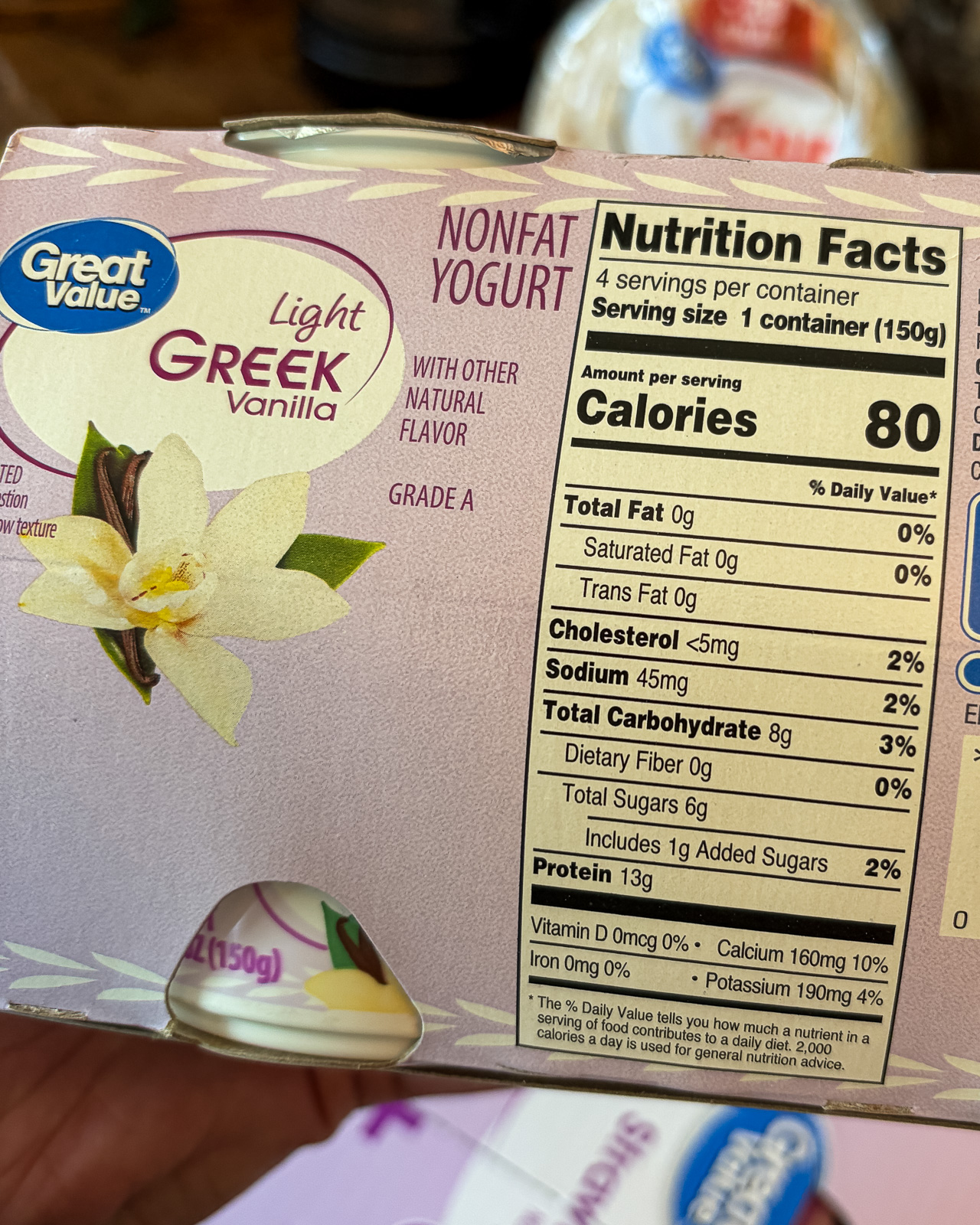
What to Look for on the Label
When I look at a label, I would start with a few basic things:
Serving size
How much food does the nutrition information actually represent?
Calories
How much energy are you getting from the amount you are realistically going to eat?
Protein
Does the food provide enough protein to meaningfully contribute to your daily intake?
Carbohydrates and fat
How do they fit into the rest of the meal and your overall nutrition plan?
Serving size is especially important because the numbers on the label may look great until you realize you normally eat two or three servings at a time.
A snack might say 150 calories on the front or make some kind of health claim, but if the serving size is much smaller than what you would actually eat, the real calorie intake can be very different.
The same thing happens with foods marketed as “high protein.”
A product may highlight protein on the front of the package, but when you turn it around, you may find that it only contains a modest amount of protein while also being relatively high in calories.
That does not automatically make it a bad food.
It just means you should know what you are actually getting.
Do not let the front of the package make the decision for you. Turn it around and read the label.
5. Shop for the Life You Actually Live
One of the easiest ways to make nutrition harder than it needs to be is to shop for the life you wish you had instead of the life you actually live.
If you know you have limited time to cook during the week, filling your cart with foods that require 45 minutes of preparation every night probably is not going to work very well.
That does not mean you have to live on packaged convenience foods.
It means you should be realistic about your schedule and choose foods that make it easier to stay consistent.
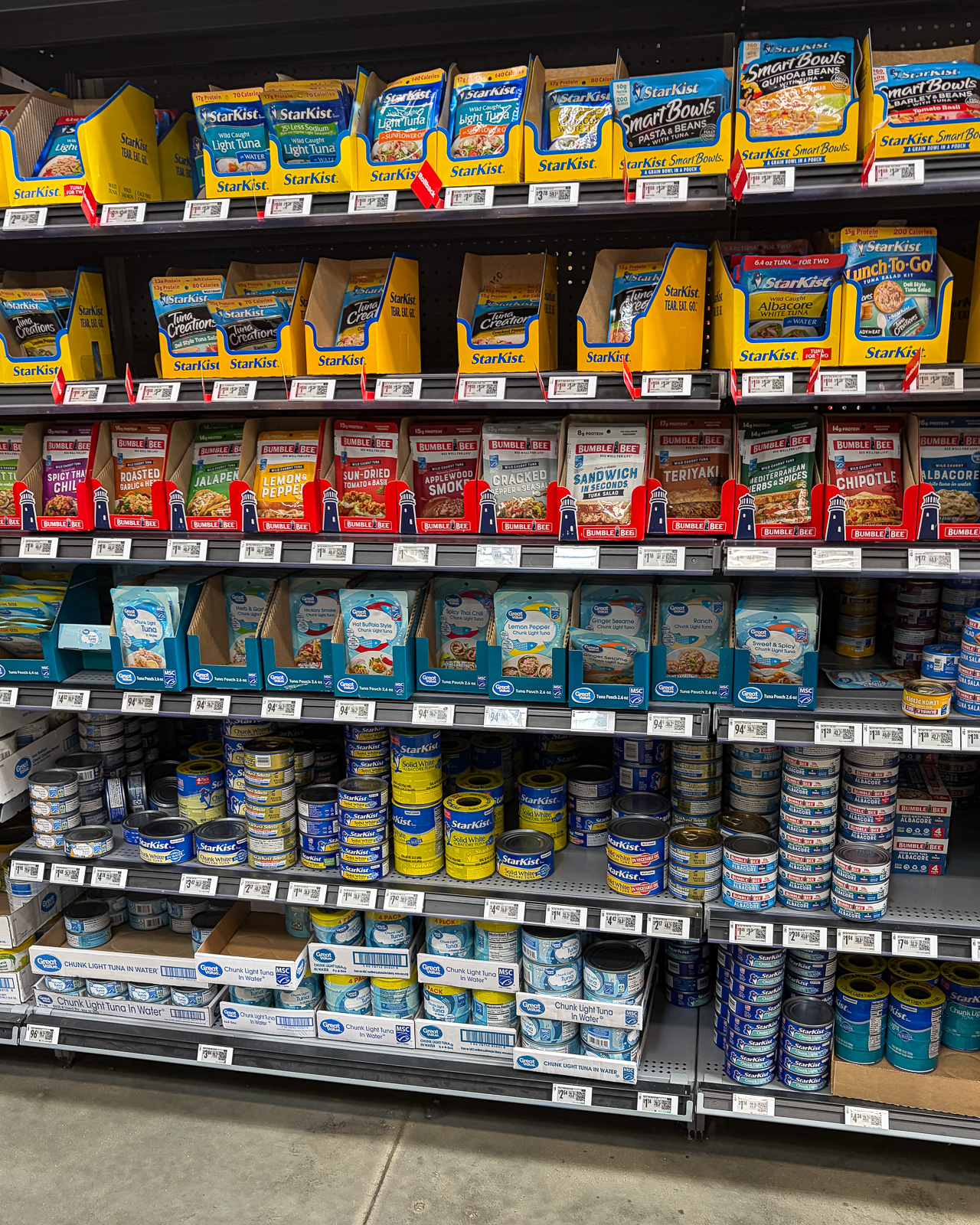
Make Convenience Work for You
That might include:
- Frozen vegetables
- Pre-cooked rice or grains
- Greek yogurt
- Hard-boiled eggs
- Pre-portioned snacks
- Canned tuna or chicken
- Frozen fish
- Pre-cut fruit or vegetables
- Simple sandwich or wrap ingredients
- Protein shakes or bars when needed for convenience
Convenience can be useful when it helps you follow the plan.
The key is to choose convenient foods that still fit your goals instead of waiting until you are hungry, tired, and short on time and then grabbing whatever is easiest.
Plan for Where Your Week Usually Falls Apart
It also helps to think about where your week usually falls apart.
Maybe breakfast is rushed every morning.
Lunch might be difficult because you are at work.
By dinner, takeout may start becoming the default.
If you know where the problem usually happens, you can shop specifically for that situation.
For example, if lunch is the issue, make sure you have something you can grab quickly that still includes protein and gives you a reasonable meal.
If dinner is the problem, having a few simple options that can be ready in 10–15 minutes may be more useful than buying ingredients for elaborate meals you never end up cooking.
Consistency beats the perfect grocery cart.
The best grocery shopping tips are the ones you can realistically follow week after week.
The goal is not to buy the “cleanest” foods possible.
A better approach is to create an environment where the better choice is also the easier choice.
That is what makes a nutrition plan sustainable.
Grocery Shopping Tips That Support Your Goals
Building muscle and losing body fat does not start when you sit down to eat.
A lot of it starts earlier—when you decide what comes home from the grocery store.
These grocery shopping tips are not about creating a perfect diet—they are about making better choices easier to repeat.
If your kitchen is stocked with foods that make it easier to get enough protein, include fruits and vegetables, fuel your training, manage portions, and prepare meals that fit your schedule, you have already made the week easier on yourself.
That does not require a perfect grocery cart.
It requires a practical one.
Start around the outside of the store and build your meals around protein and produce.
Choose carbohydrates that support your training instead of avoiding them out of fear.
Read the nutrition label instead of relying on the marketing on the front of the package.
And most importantly, buy foods that fit the life you actually live.
You do not need to eat perfectly to improve your body composition.
You need to make enough good decisions consistently for your nutrition and training to work together.
The goal is not to shop like someone who is “on a diet.” The goal is to shop like someone who is preparing to succeed.
At Mendez Personal Training, nutrition is one part of the bigger conversation I have with clients about their goals, training, habits, and the choices they make outside the gym.
If you’re interested in working with me, you can start with a free consultation.
You do not need a complicated nutrition plan to start making progress.
Sometimes the first step is simply making better decisions before the food ever reaches your kitchen.
Every Client Deserves an Advocate.

Comments are closed